
Connect Kākou | Internet Scams
Expanding Access, Expanding Responsibility
Today, more Hawaii residents than ever are coming online. As the state’s Connect Kākou initiative works to expand digital access across our islands, the work includes helping families, kūpuna, and keiki gain the skills needed to navigate today’s digital world with confidence. These initiatives are essential to ensuring that everyone has the knowledge and protections to stay safe, especially during seasons when scams peak.

Common Scams
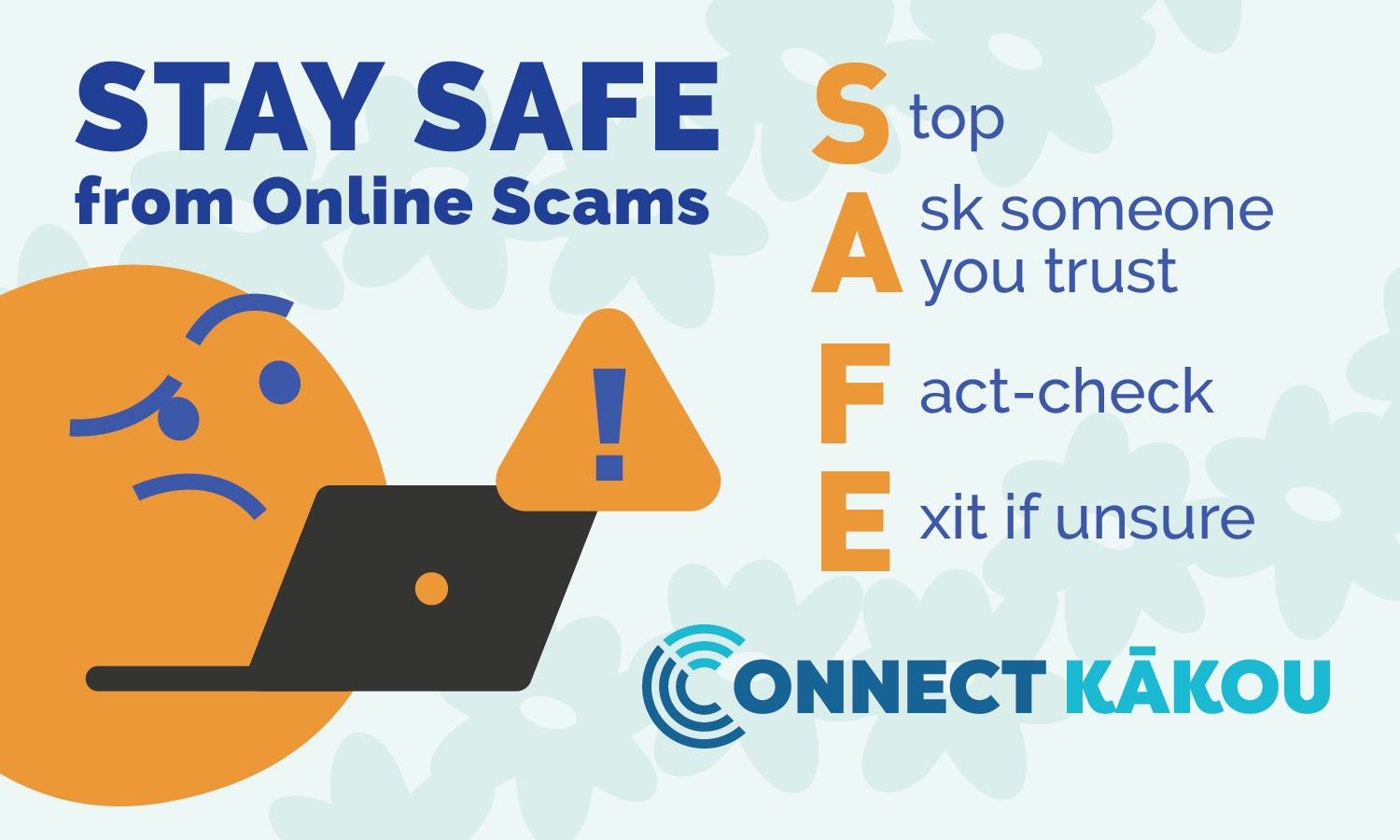
Some of the most common include fake disaster-relief charities, imposter crowdfunding campaigns, phishing texts posing as delivery updates, “can’t-miss” shopping deals that never arrive, and increasingly, fraudulent investment pitches involving cryptocurrency or digital wallets. These tactics mirror the broader methods used by charity and imposter scammers nationwide: fake websites, cloned donation pages, spoofed phone numbers, high-pressure emotional appeals, and requests for payment through untraceable methods like gift cards, crypto, or wire transfers. With AI now mainstream, scams are becoming more sophisticated by the day.
Scammers are professionals who are skilled at exploiting moments of urgency, community compassion, or crisis.
Resources
If you suspect you’ve been scammed, contact your bank or credit card issuer immediately. Report scams to the FBI Internet Crime Complaint Center (IC3.gov), FTC (877) 382-4357, and the Hawaiʻi State Office of Consumer Protection (808) 586-2630.
For more resources, visit cyberhawaii.org/resources. CyberHawaii is an information sharing and analysis non-profit organization committed to developing and enhancing Hawaiʻi’s cybersecurity capabilities. CyberHawaii is also committed to developing and accelerating educational and workforce opportunities for students via pathways from high school to two- and four- year cyber degrees. This includes early college credits to incentivize a running start to college and then the workplace.